
At Heads Up for Inclusion, hiring people with disabilities is part of its mission.
“Rather than being a cost, people with disabilities often add value to the workplace in ways employers might not expect,” says Shauna Kingston, Executive Director of Heads Up for Inclusion.
That's the message she wants local employers to hear.
Her organization is dedicated to creating communities where people of all abilities and disabilities are valued, celebrated and able to participate fully. It actively recruits staff members with disabilities because it believes doing so strengthens the team and supports its mission and values.
Shauna believes an inclusive workplace goes beyond opening the door to employment. It means recognizing the skills and expertise people with disabilities bring to their roles and ensuring they're fairly compensated for their contributions.
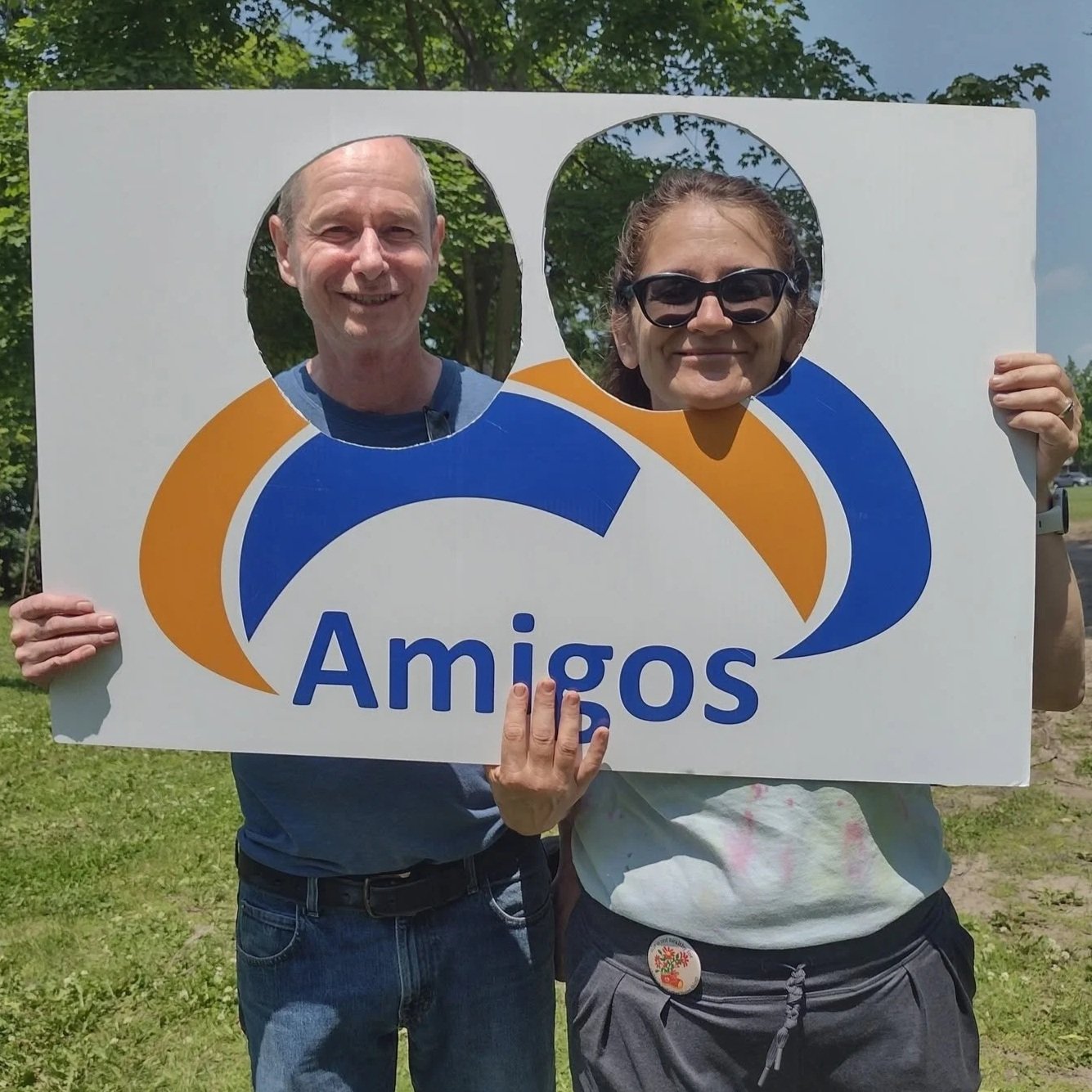
Shauna Kingston (right), Executive Director of Heads Up for Inclusion, wants more employers to recognize the value people with disabilities bring to the workplace. (Photo courtesy of Shauna Kingston)
Strengths first
Laura Lombardi, Community Amigos Program Coordinator, whose story we shared earlier in this series, is part of that team.
Shauna says Laura’s Social Service Worker training and lived experience make her especially skilled at connecting with participants and facilitating programming. She describes Laura as diligent, responsible and a strong collaborator.
Laura found her position at Heads Up for Inclusion with support from the Y Employment Agency.
Support starts during onboarding. Every new hire is asked what accommodations they need to be successful, making it clear from the outset that the organization will provide accommodations to the best of its ability.
The workplace also follows a strengths-based model, with duties tailored to each person’s interests and skills. For Laura, that means her role has been shaped around the areas where she excels and those she wants to develop.
Small changes, real difference
Transportation can be a barrier for people who rely on the Accessible Van Service in Peterborough, as it can limit their scheduling flexibility compared with colleagues who drive.
To help address this challenge, the team pairs staff members with and without cars so they can travel together when needed.
It’s a simple solution that reflects what Shauna has learned: inclusion works best when it’s proactive.
“It’s better to create a culture that provides many ways for team members to contribute and succeed, than to wait and react to barriers as they become an issue.”
She compares this approach to universal design for learning in education, where flexibility is built in from the start rather than introduced only when barriers arise.
What holds some employers back
Shauna believes some employers hesitate to hire people with disabilities because they worry about the resources required or are unsure how to supervise someone with a disability.
Her hope is that employers will recognize the other side of the equation: people with disabilities often bring skills and perspectives that add value in ways employers may not expect.
Where to begin
For local employers who want to be more inclusive but don’t know where to start, Shauna suggests connecting with employment services that specialize in helping people with disabilities find meaningful work.
These services can help employers build their capacity to create inclusive workplaces and connect them with suitable candidates.
By focusing on the strengths and contributions of people with disabilities, employers can build stronger, more inclusive workplaces.
Shauna’s story is part of At Work. In Their Own Words, a four-part series from the Council for Persons with Disabilities sharing local perspectives on work and inclusion during National Disability Employment Awareness Month in October.